Case Study: The Double-Buffered GEMM
sync_copy_db.metal is the tiled GEMM with
double buffering added, and the cleanest
measured demonstration in this glossary that there is no single fastest kernel.
The delta from its sibling is exactly three structural changes: two buffer sets, a prologue prefetch, one barrier per iteration instead of two.
  threadgroup float A_tg[2][BM * BK];
  threadgroup float B_tg[2][BK * BN];
  ...
  // Prologue: load tile 0 into buffer 0.
  load_tile<BM, BK, NTHREADS>(A + tg_row * k, k, A_tg[0], tid);
  load_tile<BK, BN, NTHREADS>(B + tg_col,     m, B_tg[0], tid);

  for (uint l = 0; l < k_tiles; l++) {
    threadgroup_barrier(mem_flags::mem_threadgroup);
    ushort nxt = ushort(1) - cur;
    if (l + 1 < k_tiles) {
      load_tile<BM, BK, NTHREADS>(A + tg_row * k + k_off, k, A_tg[nxt], tid);
      load_tile<BK, BN, NTHREADS>(B + k_off * m + tg_col, m, B_tg[nxt], tid);
    }
    /* compute on A_tg[cur] / B_tg[cur] */
    cur = nxt;
  }
Source: sync_copy_db.metal:87-126↗, abridged
The single barrier is doing double duty: "the prefetch landed" and "everyone's done with the buffer we're about to overwrite" are the same condition when the buffers alternate. The kernel's own header comment is honest about the mechanism: without the dead async-DMA primitive this is not true overlap. It's ILP-based latency hiding, the same threads issuing independent loads and math for the scheduler to interleave.
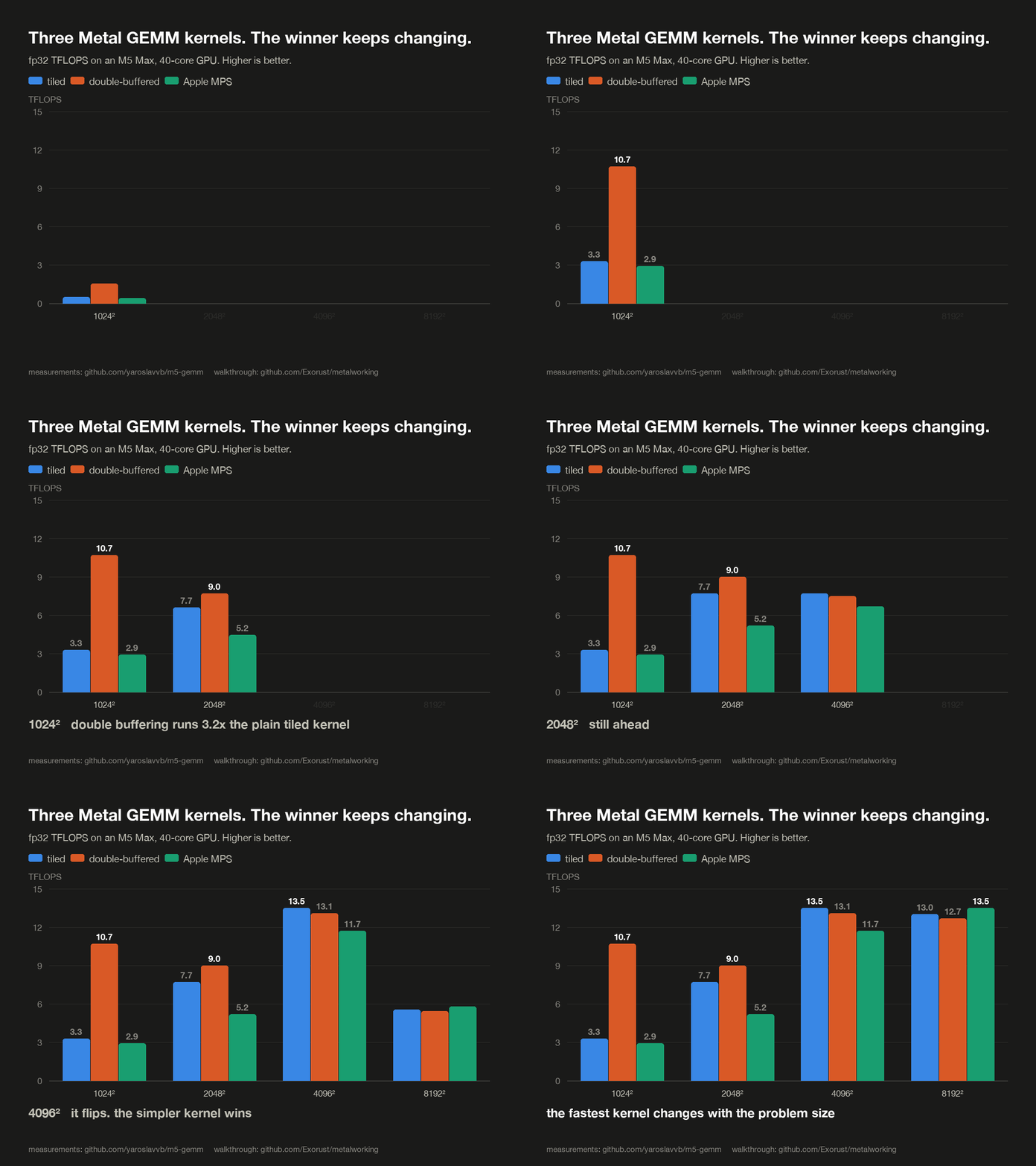
The payoff table (author's numbers, M5 Max, fp32, best of 3×5, from the repo README↗):
| Size | sync_copy | sync_copy_db | MPS |
|---|---|---|---|
| 1024² | 3.3 TF | 10.7 TF | 2.9 TF |
| 2048² | 7.7 TF | 9.0 TF | 5.2 TF |
| 4096² | 13.5 TF | 13.1 TF | 11.7 TF |
| 8192² | 13.0 TF | 12.7 TF | 13.5 TF |
Three regimes, three winners. At 1024², launch and DRAM-fetch latency dominate and the prefetch pipeline hides them: 3× over both alternatives, and note this is the regime LLM decode lives in. At 4096², the simpler kernel wins because its smaller loop unrolls better, so compiler quality matters more than the algorithm here. At 8192², everything hits the bandwidth wall and MPS converges with the hand-written kernels.
The README's "things that did not help" section is required reading as
methodology: offline -O3 -ffast-math compilation
(bit-identical to runtime), bigger simdgroup tiles
(10× slower from spills), SW=3 threadgroups. The
author measured these negative results and published them, which is the norm this
glossary's war stories wish the whole ecosystem
followed.